


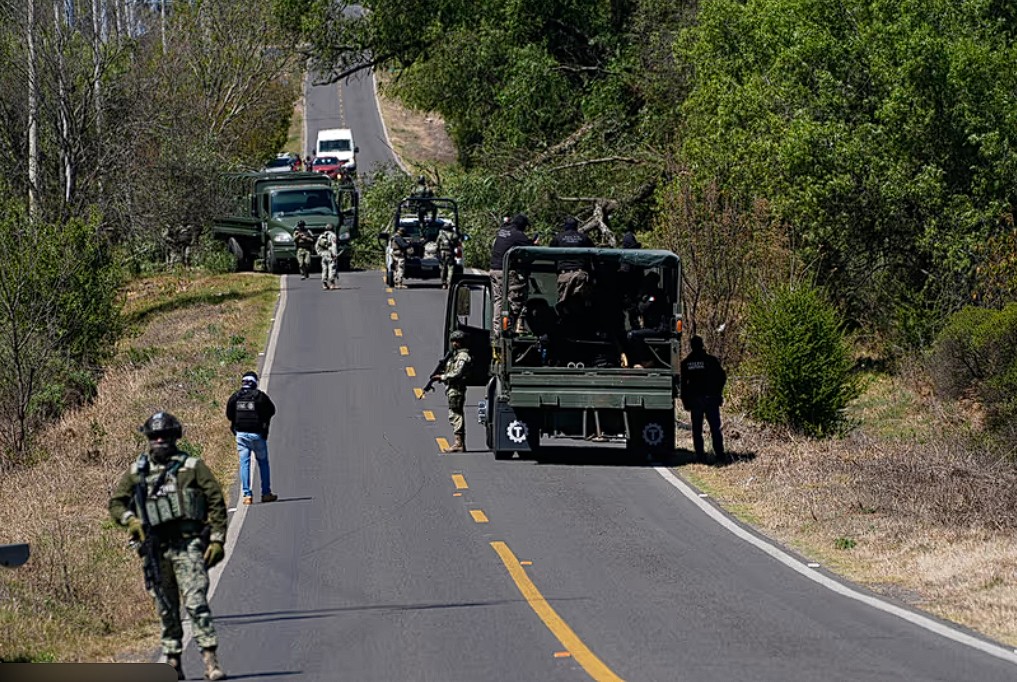
A federal military operation in Jalisco has triggered widespread disruption across Mexico’s transport, retail, and education sectors following the reported death of Nemesio Oseguera Cervantes, leader of the Jalisco New Generation Cartel (CJNG).
The operation led to 252 retaliatory road blockades across 20 states, significantly affecting key logistics corridors and commercial activity. Authorities confirmed that the Secretaría de la Defensa Nacional and the Guardia Nacional carried out coordinated security responses, arresting 70 suspected members of organized crime. While 90% of the blockades were cleared, several regions remain under red alert.
Transport and Logistics Impact
The Cámara Nacional del Autotransporte de Carga (CANACAR) advised freight operators to suspend movements and prioritize safety, warning of possible supply chain disruptions if instability persists.
Air travel was also affected. The Mexico City International Airport (AICM) remained operational, but flights to Guadalajara and Puerto Vallarta were canceled. Airlines including United Airlines, Southwest Airlines, Alaska Airlines, Air Canada, and WestJet temporarily suspended select routes.
Bus operators ADO and Estrella Roja either halted or rescheduled services, leaving passengers stranded at terminals in affected states.
Retail and Education Closures
Major retailers suspended operations or reduced hours as a precaution. Coppel closed all stores in Jalisco, while El Palacio de Hierro suspended activity in Guadalajara and León. Walmart, Bodega Aurrerá, and Sam's Club adjusted operating hours.
State governments in multiple regions suspended in-person classes. The Universidad Nacional Autónoma de México (UNAM) maintained activities with flexible measures, while higher education institutions were encouraged to transition to virtual learning where necessary.
Economic Concerns
Experts estimate that violence and organized crime account for approximately 3.4% of Mexico’s GDP, with businesses allocating between 2% and 10% of annual budgets to security. Beyond immediate disruptions, analysts warn that prolonged instability could impact foreign investment, productivity, and supply chain reliability.
Authorities continue monitoring the situation as efforts focus on stabilizing affected regions and restoring full economic activity.
Source: Mexico Business News
The operation led to 252 retaliatory road blockades across 20 states, significantly affecting key logistics corridors and commercial activity. Authorities confirmed that the Secretaría de la Defensa Nacional and the Guardia Nacional carried out coordinated security responses, arresting 70 suspected members of organized crime. While 90% of the blockades were cleared, several regions remain under red alert.
Transport and Logistics Impact
The Cámara Nacional del Autotransporte de Carga (CANACAR) advised freight operators to suspend movements and prioritize safety, warning of possible supply chain disruptions if instability persists.
Air travel was also affected. The Mexico City International Airport (AICM) remained operational, but flights to Guadalajara and Puerto Vallarta were canceled. Airlines including United Airlines, Southwest Airlines, Alaska Airlines, Air Canada, and WestJet temporarily suspended select routes.
Bus operators ADO and Estrella Roja either halted or rescheduled services, leaving passengers stranded at terminals in affected states.
Retail and Education Closures
Major retailers suspended operations or reduced hours as a precaution. Coppel closed all stores in Jalisco, while El Palacio de Hierro suspended activity in Guadalajara and León. Walmart, Bodega Aurrerá, and Sam's Club adjusted operating hours.
State governments in multiple regions suspended in-person classes. The Universidad Nacional Autónoma de México (UNAM) maintained activities with flexible measures, while higher education institutions were encouraged to transition to virtual learning where necessary.
Economic Concerns
Experts estimate that violence and organized crime account for approximately 3.4% of Mexico’s GDP, with businesses allocating between 2% and 10% of annual budgets to security. Beyond immediate disruptions, analysts warn that prolonged instability could impact foreign investment, productivity, and supply chain reliability.
Authorities continue monitoring the situation as efforts focus on stabilizing affected regions and restoring full economic activity.
Source: Mexico Business News