


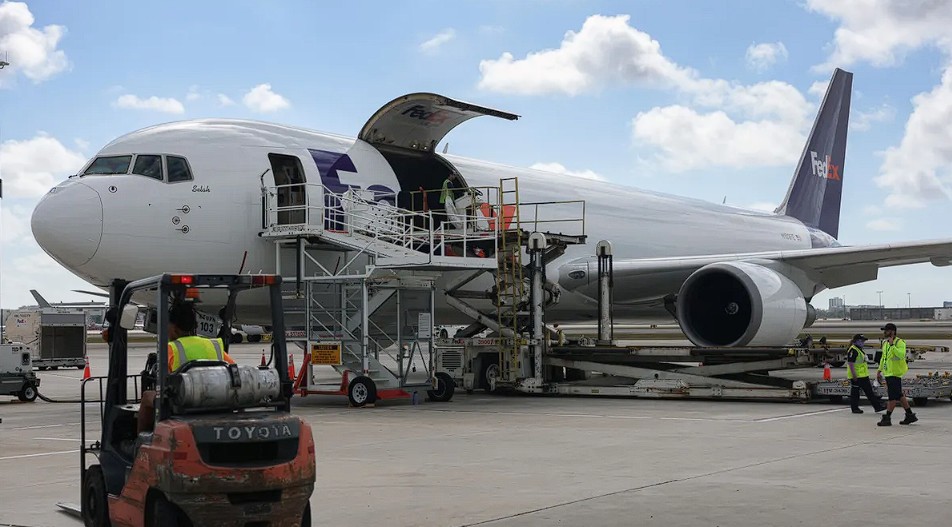
Global air cargo spot rates surged 30% year over year in April to an average of $3.34 per kilogram, marking the highest level since October 2022, according to Xeneta.
Rates from Southeast Asia to North America jumped 33% to $6.46/kg, while Northeast Asia to North America climbed 28% to $5.54/kg. In contrast, Transatlantic spot rates from Europe to North America fell 17% to $2.57/kg, highlighting uneven market conditions across trade lanes.
Niall van de Wouw said the spike was driven primarily by supply shortages rather than rising jet fuel prices, challenging the assumption that higher fuel costs automatically lead to higher freight rates.
Despite ongoing geopolitical tensions and fuel market volatility linked to disruptions around the Strait of Hormuz, Xeneta expects rates to gradually ease as passenger flight capacity returns to the market during the summer season.
The report also showed:
Global air cargo volumes rose 2% YoY
Long-term freight rates increased more than 18%
Global dynamic load factor reached 62%
Xeneta warned shippers to closely examine carrier fuel surcharges and better understand how freight forwarders secure cargo capacity, especially ahead of Q3 and Q4 contract negotiations.
Meanwhile, e-commerce demand from China continues to weaken, with March shipment volumes declining 9% year over year for the fourth consecutive month.
Source: Supply Chain Dive
Rates from Southeast Asia to North America jumped 33% to $6.46/kg, while Northeast Asia to North America climbed 28% to $5.54/kg. In contrast, Transatlantic spot rates from Europe to North America fell 17% to $2.57/kg, highlighting uneven market conditions across trade lanes.
Niall van de Wouw said the spike was driven primarily by supply shortages rather than rising jet fuel prices, challenging the assumption that higher fuel costs automatically lead to higher freight rates.
Despite ongoing geopolitical tensions and fuel market volatility linked to disruptions around the Strait of Hormuz, Xeneta expects rates to gradually ease as passenger flight capacity returns to the market during the summer season.
The report also showed:
Global air cargo volumes rose 2% YoY
Long-term freight rates increased more than 18%
Global dynamic load factor reached 62%
Xeneta warned shippers to closely examine carrier fuel surcharges and better understand how freight forwarders secure cargo capacity, especially ahead of Q3 and Q4 contract negotiations.
Meanwhile, e-commerce demand from China continues to weaken, with March shipment volumes declining 9% year over year for the fourth consecutive month.
Source: Supply Chain Dive