


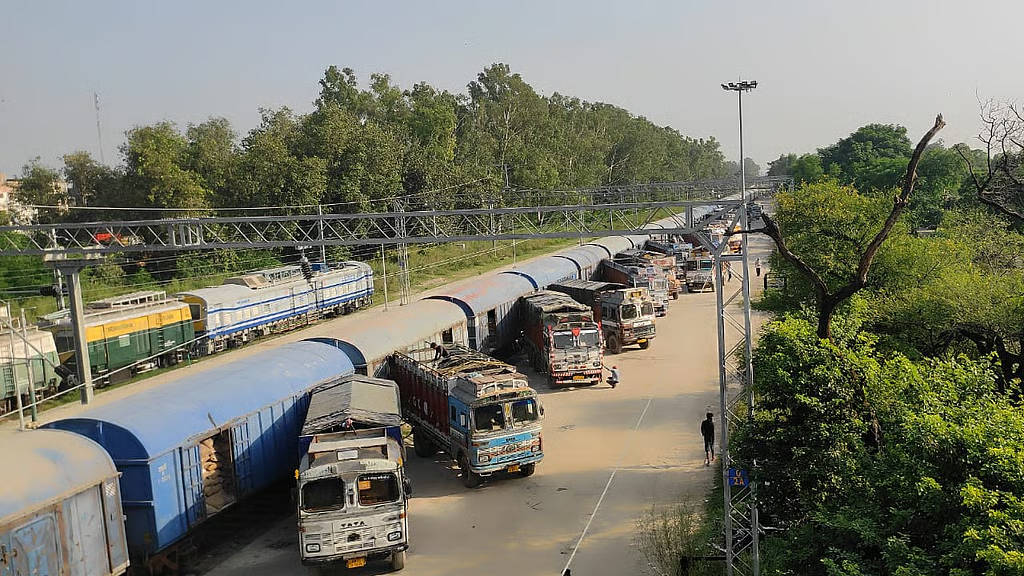
Indian Railways has rolled out a series of scheduled, commodity-specific, time-tabled cargo trains designed to improve reliability, reduce transit times, and deliver industry-aligned logistics solutions. The initiative connects major production and consumption hubs across northern India and has already shown significant improvements in freight efficiency.
The new services include:
- Annapurna Service: Ludhiana to Varanasi, transporting foodgrains over 704 km in an average of 17 hours.
- Gati-Vahan Service: Farrukhnagar (Haryana) to Lucknow for automobiles, covering 557 km in 28 hours — down from 70 hours previously.
- Niryaat Cargo Service: Garhi to Mundra Port for container traffic, covering 1,061 km in 32 hours.
- Anantnag Cement Cargo Service: Roopnagar (Punjab) to Anantnag (Jammu and Kashmir), transporting cement over 586 km in 31 hours.
According to Indian Railways, these services were introduced after extensive planning and coordination with stakeholders such as the Food Corporation of India (FCI), automobile manufacturers, container train operators, and adjacent railway zones to optimize routes across inter-divisional and inter-zonal networks.
Initially launched on a trial basis, the services have now stabilized with positive feedback from industry users.
- FCI: praised the Annapurna Service for enabling smoother dispatch of foodgrains to deficit regions, improving labour and truck deployment at unloading points.
- Maruti Suzuki: reported that the Gati-Vahan Service cut transit times by over 40 hours, allowing delivery commitments on par with road transport.
- Exporters: using the Niryaat Cargo Service confirmed faster coordination with ports and shipping companies due to shorter transit times.
- Cement companies: welcomed the Anantnag Service for improving supply chain reliability despite weather-related disruptions, supported by the opening of a new goods shed at Anantnag.
“With scheduled timings and advance information on arrivals and departures, consignors and consignees can now plan logistics more effectively,” the Railways said in a statement. “These services enhance predictability, efficiency, and competitiveness in freight transport while supporting trade and regional development.”
The initiative underscores Indian Railways’ commitment to strengthening freight connectivity and positioning rail as a faster, more dependable alternative to road transport.
Source: New Indina Express
The new services include:
- Annapurna Service: Ludhiana to Varanasi, transporting foodgrains over 704 km in an average of 17 hours.
- Gati-Vahan Service: Farrukhnagar (Haryana) to Lucknow for automobiles, covering 557 km in 28 hours — down from 70 hours previously.
- Niryaat Cargo Service: Garhi to Mundra Port for container traffic, covering 1,061 km in 32 hours.
- Anantnag Cement Cargo Service: Roopnagar (Punjab) to Anantnag (Jammu and Kashmir), transporting cement over 586 km in 31 hours.
According to Indian Railways, these services were introduced after extensive planning and coordination with stakeholders such as the Food Corporation of India (FCI), automobile manufacturers, container train operators, and adjacent railway zones to optimize routes across inter-divisional and inter-zonal networks.
Initially launched on a trial basis, the services have now stabilized with positive feedback from industry users.
- FCI: praised the Annapurna Service for enabling smoother dispatch of foodgrains to deficit regions, improving labour and truck deployment at unloading points.
- Maruti Suzuki: reported that the Gati-Vahan Service cut transit times by over 40 hours, allowing delivery commitments on par with road transport.
- Exporters: using the Niryaat Cargo Service confirmed faster coordination with ports and shipping companies due to shorter transit times.
- Cement companies: welcomed the Anantnag Service for improving supply chain reliability despite weather-related disruptions, supported by the opening of a new goods shed at Anantnag.
“With scheduled timings and advance information on arrivals and departures, consignors and consignees can now plan logistics more effectively,” the Railways said in a statement. “These services enhance predictability, efficiency, and competitiveness in freight transport while supporting trade and regional development.”
The initiative underscores Indian Railways’ commitment to strengthening freight connectivity and positioning rail as a faster, more dependable alternative to road transport.
Source: New Indina Express